Bank Accounts During Separation: What You Can and Can't Do (Without the Panic)
There's a particular kind of stuck that hits the moment you decide to separate. The relationship has shifted, but the bills haven't stopped. The mortgage still wants paying. The kids still need feeding. And somewhere underneath all of it sits a question almost nobody talks about: what on earth are you actually allowed to do with your money right now?
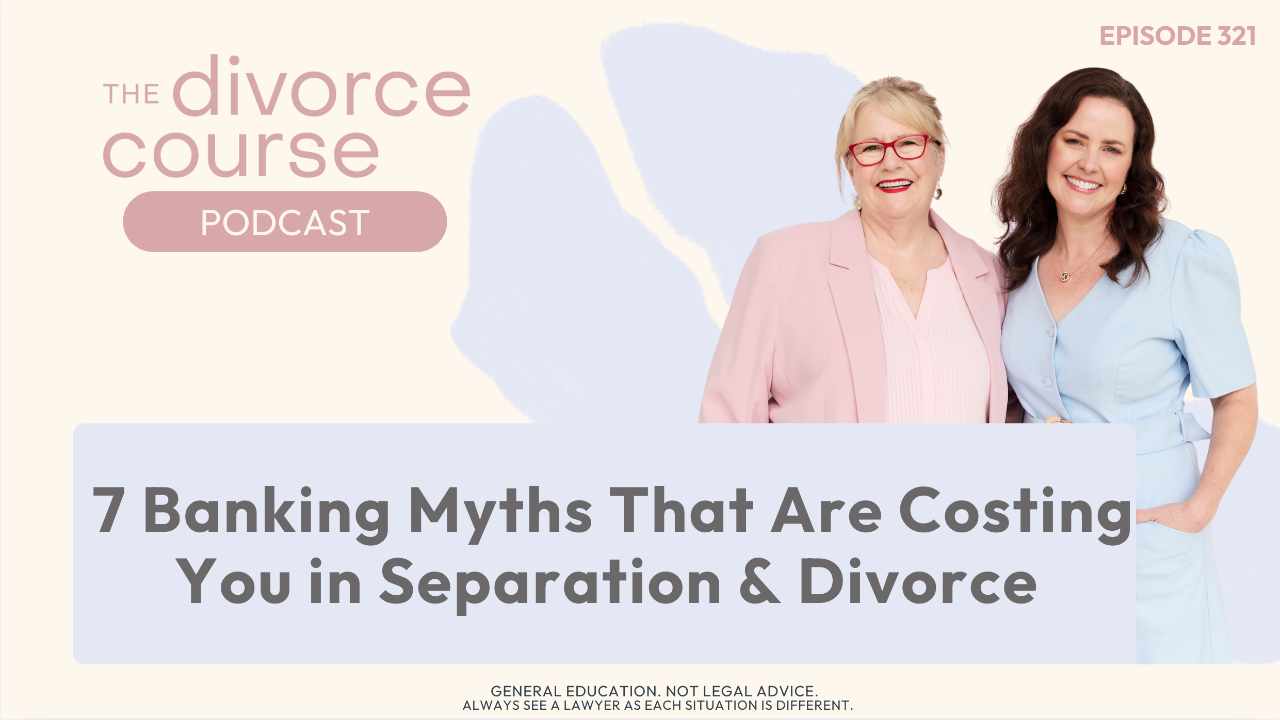
It's one of the most common things we hear from listeners, and it's also one of the least discussed parts of separation. People walk out of the first lawyer's meeting knowing about property settlement, but with no real sense of how they're supposed to live in the weeks and months before they get there. So this week on The Divorce Course Podcast, Mum and I sat down to talk it through properly: the bank account myths, the safety side of things, and the mistakes that quietly create drama later on.
We're not going to give you legal advice here (more on that below), and we're certainly not going to tell you what to do in your situation. What we can do is help you feel less confused, because confusion is exactly what keeps people frozen.
The myth that traps people
The biggest myth we come up against is the belief that nothing can change until property settlement is finalised. "We're not allowed to touch anything." "Everything has to stay exactly the same." Sometimes an ex says it. Sometimes people just absorb it as fact. And then they sit in that frozen state, sometimes for years, while their financial position quietly slips away from them.
At the other extreme is the opposite myth: that separating is a green light to grab everything and bolt. Neither version is the full picture, and in the episode Mum explains why the truth sits somewhere in the messy middle.
The distinction we keep coming back to is the difference between managing your day-to-day finances and permanently dividing your property. They feel like the same thing when you're in the thick of it. They aren't. One is about keeping food on the table and fuel in the car while life keeps moving. The other happens later, and it doesn't have to swallow your present whole.
Joint accounts and the fear of touching them
So many people freeze over the joint account. They watch the balance, they notice money leaving, and they still can't bring themselves to move a dollar because some part of them is convinced they'll get in trouble for it.
Mum has a lovely way of reframing this that we get into during the episode. She talks about thinking of joint funds less like a single untouchable pot and more like two sets of groceries: one set is yours to live on, one set is theirs. It would be strange, she points out, to leave all of your groceries in someone else's fridge and then have to knock on the door each time you wanted to eat.
We also talk about how this plays out differently depending on the kind of relationship you're leaving. An amicable separation calls for one approach. A high-conflict or controlling dynamic calls for something quite different, and a lot of the conversation is about reading which situation you're actually in before you act.
Opening your own account, and why a new bank can matter
"Am I even allowed to open my own bank account?" We hear this one constantly, and the answer genuinely surprises people. Mum talks in the episode about the feeling of opening her own account again after years, and how much it shifted something for her. There's a real sense of autonomy that comes with having somewhere that's just yours.
We also touch on why, for some people, the choice of bank matters more than you'd expect, particularly if there's been control, financial abuse, or family violence in the relationship. The safety side of banking isn't something most people think about until they need to, and we'd rather you heard it before than after.
The kids' accounts nobody warns you about
If you've ever set up a little savings account for your child, or a grandparent's been quietly tucking away birthday money, this part of the episode is for you. Kids' accounts come with their own set of assumptions, and some of them aren't quite what people think. We talk through who tends to control these accounts, how they fit into the bigger picture, and the myths floating around social media about child support that we really wanted to address head-on.
Why we want you to actually listen
We could keep summarising, but the truth is this topic has a lot of texture to it, and the value is in hearing Mum talk through the real situations she's seen across thirty-five years of family law. The stories are where it clicks. The lady whose car repair got cancelled the day she announced she was leaving. The account someone nicknamed "just to keep it safe." The difference between protecting your money and using it to punish someone, which we think is one of the most important threads in the whole conversation.
If you've been lying awake wondering whether you're allowed to move your wages, split the cash, or simply open something in your own name, this episode will help you breathe a little easier and feel a lot less alone in the not-knowing.
🎧 Listen to "Banking Through Separation: Myths and Safety" on Apple Podcasts, Spotify or YouTube, and have a notebook handy, because we set a bit of homework at the end.
And if any of this brought up something heavier, please know support is there. You can reach 1800 RESPECT on 1800 737 732 any time, and in an emergency always call 000.
This blog and the episode it accompanies are general information and education only. They are not legal advice and are not a substitute for advice from a qualified family lawyer about your individual circumstances. Every situation is different, laws vary between countries and may have changed since recording, so please speak with a professional before making decisions about your finances or your separation.
All our best, Laura & Lyn Co-Hosts of The Divorce Course Podcast
Come along to our next free webinar
Stay connected with news and updates!
Join our mailing list to receive the latest news and updates from our team.
Don't worry, your information will not be shared.
We hate SPAM. We will never sell your information, for any reason.