
How to Make or take a Property Settlement Offer in Your Divorce (Without the Overwhelm)
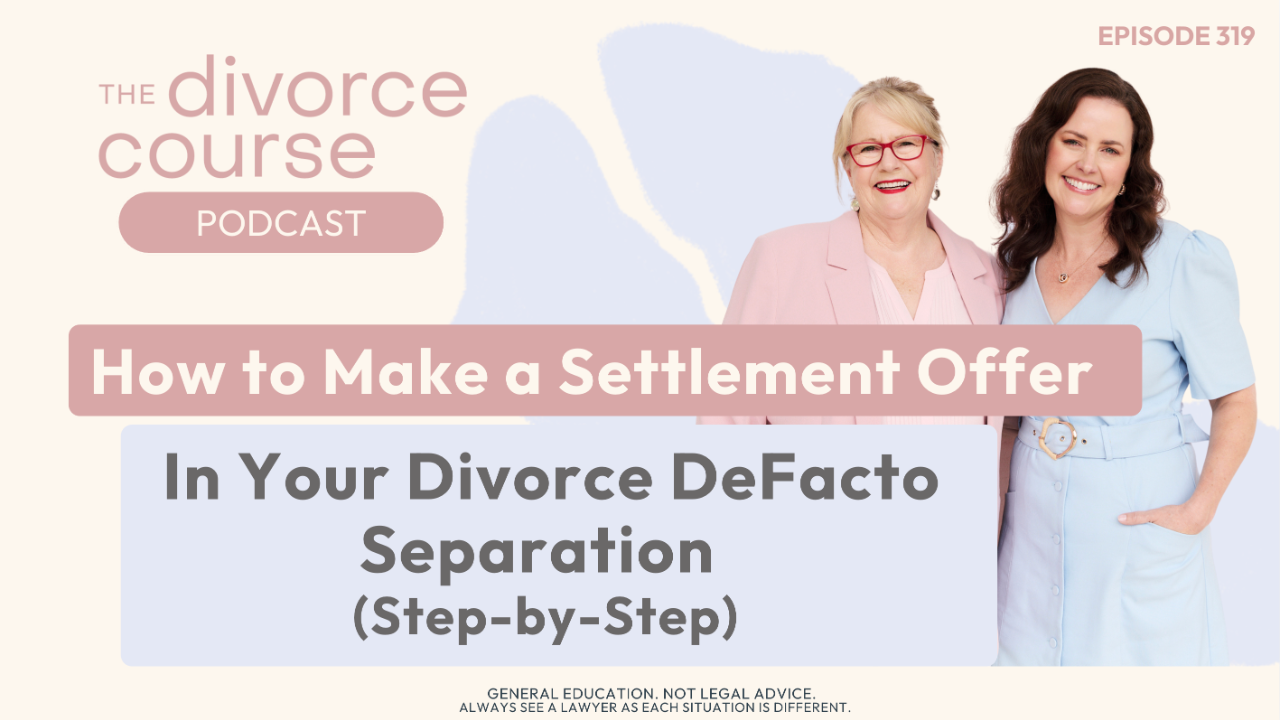
If you've ever sat there staring at a message from your ex thinking, "Are you kidding me? What am I supposed to do with this?" - you're not alone. Offers are one of the most confusing parts of separation, and they're also one of the things we get asked about the most.
When can I make one? Do I need a lawyer to write it? Is it too late now that we're already arguing? And what on earth do I do with the one I've just been sent?
In this episode of The Divorce Course Podcast, we sat down to pull the whole thing apart - what an offer actually is, what to think about before you make one, the different ways to make one depending on who your ex is, and what to do when a horrible one lands in your inbox. Here's a taste of what we covered.
So, what even is an offer?
At its simplest, an offer is you saying: "Here's how I think we could resolve this." You might propose keeping the house while your ex keeps their super, for example. They look at it, they weigh up what it means for them, and then they either agree, say no, or send something back. That back-and-forth is where counteroffers come in.
It sounds basic when you put it like that. But the confusion usually isn't about what an offer is - it's about the rules people think exist around them.
The biggest myth we want to bust
So many people believe you can only make an offer at mediation, or that it has to come through a lawyer on fancy letterhead. Neither is true.
You can make an offer at almost any point in the process - before mediation, after you've seen a lawyer, during negotiations, even further down the track. There's no magic moment you have to wait for. The thing that matters isn't timing so much as information: having a clear picture of what's on the table before you put your name to anything.
We've watched people get so attached to the idea of "getting to mediation" that they sit on their hands for months, when a clear, well-considered offer earlier on might have saved them an enormous amount of time, stress and money.
Why the emotional offer almost always backfires
Here's the one we worry about most.
In those raw early weeks, it's so tempting to throw out a "let's just do 50/50 and be done with it" - not because you've thought it through, but because you feel guilty, you want to be seen as the reasonable one, or you just want the awful feeling to stop. We get it. We've felt it.
The trouble is, an offer made purely from that emotional place rarely reflects your actual situation. And even a casual, verbal "I won't touch your super" has a way of lodging itself in the other person's head - so later, when you try to take a more considered approach, you're suddenly the one "going back on your word."
This is exactly why we always encourage people to slow down, get their own information together, and understand their position before they say a number out loud. (More on that in the episode - and it's a big part of what we walk you through inside our course.)
A gentle "I'll get back to you" is allowed
If you've just been blindsided - "I'm leaving, here's my proposal for the property, here's my plan for the kids, I've booked mediation for next week" - you do not have to respond on the spot.
One of the most freeing things we talk about is that you're allowed to say: "I've had a lot of information land on me. I need some time to take it in. I'll get back to you." That's it. No drama, no defensiveness. Just a pause.
Offers come in different flavours
In the episode we go into the main types of offers you'll come across - including time-limited offers (the ones with a deadline attached), standing offers (the kind that sit open until they're replaced), and Calderbank offers. Each one behaves a little differently, and each has its moment. We talk through the pros, the pitfalls, and which one Mum leans towards after 35 years of doing this.
Tailoring your approach to your ex
This is the part listeners tell us they find most useful, because not every ex is the same.
- The avoidant ex who ignores everything? A wall of legal jargon will only make them shut down further. We talk about keeping it clear, short and human.
- The high-conflict "yeah, but" ex who turns every message into a battle? There's a way to make an offer that protects you and quietly takes the wind out of their sails.
- The amicable ex? Sometimes a confirming email is all you need - and sometimes too much legal involvement can blow up a perfectly civil situation.
- The manipulative or controlling ex? This one needs the most care, and we share strategies for staying steady when they're fishing for a reaction.
If your ex falls into that last category, we'd also point you towards our episode on mediating with a difficult ex - it pairs really well with this one.
When the offer you get is terrible
First rule: don't react. We know that's far easier said than done.
A bad offer isn't a wasted offer. Even an outrageous one tells you something - where they're standing, how far apart you really are, and what arguments they might be leaning on. In the episode we talk about how to take a breath, look at it clearly, and respond in a way that keeps you in a strong position rather than handing your ex the emotional reaction they may be after.
The big takeaway
Mum summed it up beautifully: an offer isn't a single moment in your case - it's more like a silver thread running all the way through it. A little bit of hope. A door that stays open. A way for things to resolve the moment the other person is ready.
As she put it: an offer is always appropriate.
Have a listen
There's so much more in the full episode - the practical thinking that goes on before an offer, the different offer types in detail, and how to handle each personality type. If offers have been keeping you up at night, this one's for you.
🎧 Listen to the episode on Spotify, Apple Podcasts, or wherever you get your podcasts - and if it helps, share it with someone who needs it.
This blog and the podcast episode are general information only and are not legal advice. Every situation is different, and Australian family law may not apply to yours. Please speak to a qualified family lawyer about your individual circumstances.
If you or someone you know is in danger, call 000. For confidential support, you can contact 1800 RESPECT on 1800 737 732 or Lifeline on 13 11 14.
Want to learn how to prepare and present an offer yourself, step by step? Our DIY Divorce Blueprint walks you through the whole process. Find out more at thedivorcecourse.com.au/enrol
All our best, Laura & Lyn Your Guides By Your Side
Come along to our next free webinar
Stay connected with news and updates!
Join our mailing list to receive the latest news and updates from our team.
Don't worry, your information will not be shared.
We hate SPAM. We will never sell your information, for any reason.